Showing posts with label dendrobates. Show all posts

Wednesday, April 2, 2008

Poison Dart Frogs-beautiful little jewels


The family dendrobatidae is composed of the genus Dendrobates, Phyllobates, Epipedobates, Minyobates, Colostethus and Aromobates. They live in tropical forests from Nicaragua to Bolivia and you can find them from sea level to 2.600 m. in the Venezuelan mountains ("Tepuis") as is the case of Epipedobates rufulus.

The skin of these frogs has a powerfull poison and, normally, they've striking colours and patterns to advertise its predators they're dangerous, this is called aposematic coloration. The poison is very strong in the case of Phyllobates terribilis, P.auratoenia and P.bicolor. These three species could be very dangerous even for humans. Some tribus of Colombia use them to poison their darts to hunt, it's instantaneous and it lasts for a long time in the darts. The captive breed poison dart frogs don't have this toxicity because the diet we give them in our terrariums lacks some alcaloids or another chemical compounds which are the precursors of the poison.

As a rule these frogs adapt and breed well in captivity. Its wonderfull coloration, the elaborate and nice mating methods and the diurnal activity make the poison dart frogs a desirable subject for the terrariums. A big number of people breed them in captivity.

Poison Dart Frogs-beautiful little jewels


Introduction

The family dendrobatidae is composed of the genus Dendrobates, Phyllobates, Epipedobates, Minyobates, Colostethus and Aromobates. They live in tropical forests from Nicaragua to Bolivia and you can find them from sea level to 2.600 m. in the Venezuelan mountains ("Tepuis") as is the case of Epipedobates rufulus.

The skin of these frogs has a powerfull poison and, normally, they've striking colours and patterns to advertise its predators they're dangerous, this is called aposematic coloration. The poison is very strong in the case of Phyllobates terribilis, P.auratoenia and P.bicolor. These three species could be very dangerous even for humans. Some tribus of Colombia use them to poison their darts to hunt, it's instantaneous and it lasts for a long time in the darts. The captive breed poison dart frogs don't have this toxicity because the diet we give them in our terrariums lacks some alcaloids or another chemical compounds which are the precursors of the poison.

As a rule these frogs adapt and breed well in captivity. Its wonderfull coloration, the elaborate and nice mating methods and the diurnal activity make the poison dart frogs a desirable subject for the terrariums. A big number of people breed them in captivity.

Wednesday, March 5, 2008

Blue Poison Dart Frog, dendrobates azureus,facts,photos


Description of Animal

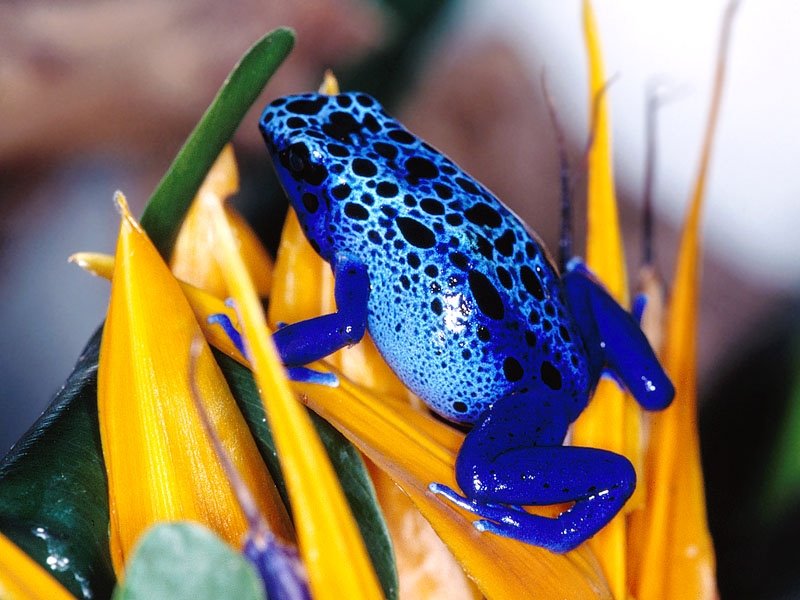
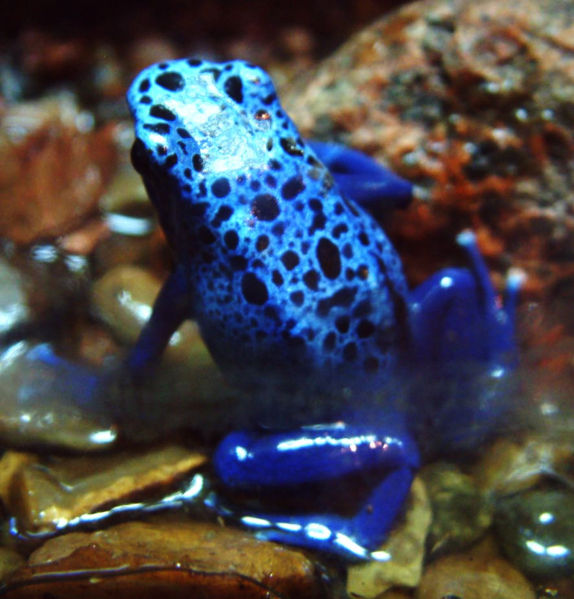
These little frogs are easily recognized by their blue color, which is generally darker on the limbs and belly and overlaid with black spots or patches, especially on the head and back.

As their name implies, poison dart frogs can release toxins from the skin that are distasteful and potentially lethal to would-be predators. Three very toxic species of poison dart frogs from Colombia and South America are utilized by Indians to poison the tips of blowgun darts.

Blue poison dart frogs are active during the day and can be found hiding among boulders and debris near streams; however, they lack toe webbing and are poor swimmers, so they are never found in the water.

Aquarist's Note

This colorful frog was not even discovered until 1968!